The Intent-to-Pipeline Blueprint V1.7 x Lemlist
How to identify warm LinkedIn leads, understand the signal behind them, and turn that context into better outreach with Intentbot
Most outbound fails before the first message is ever sent.
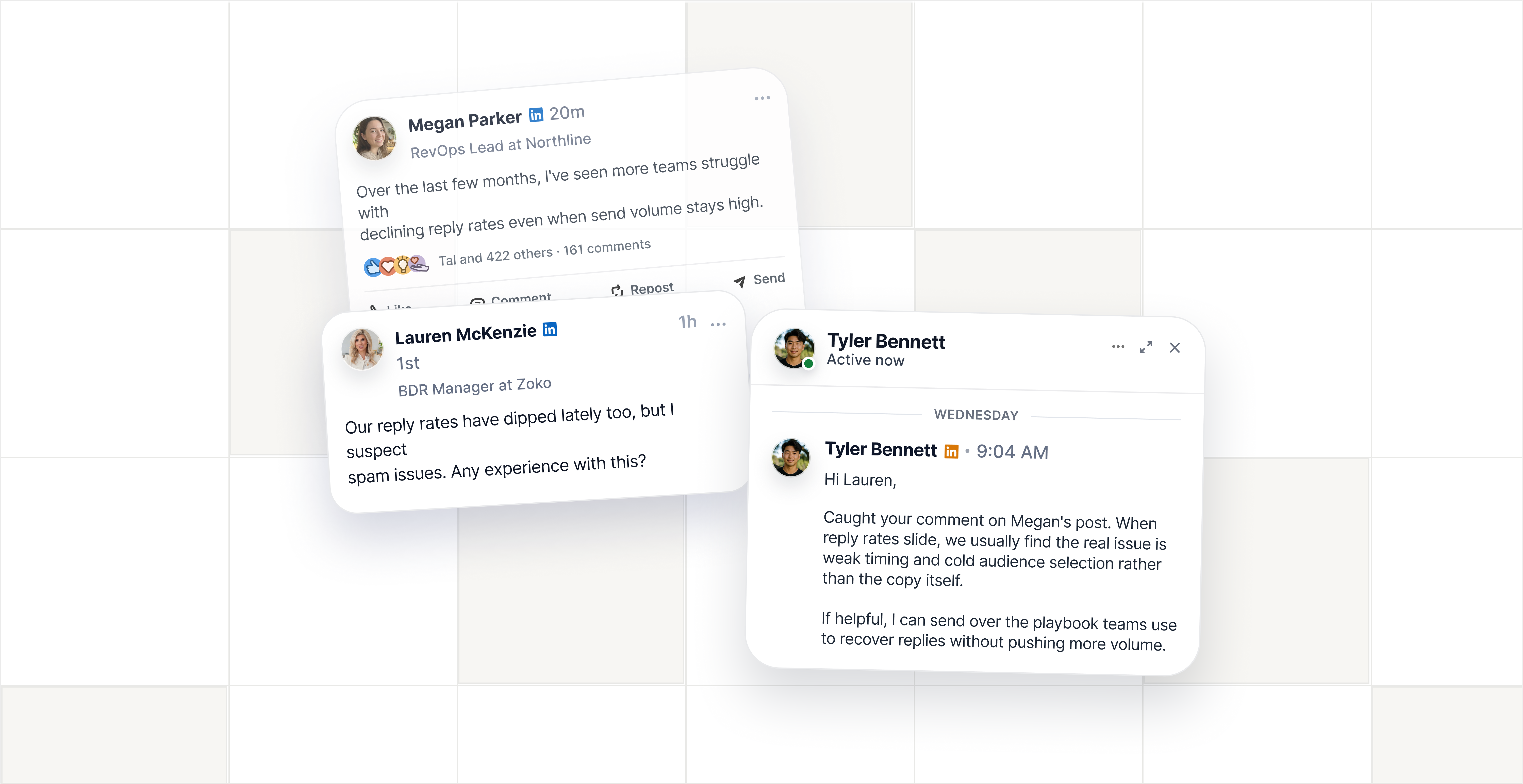
Not because teams lack tools. Not because they cannot write a decent DM. But because they start too late — after they have already missed the real advantage.
The advantage is not sending more messages.
The advantage is acting on the right signal, with the right context, at the right time.
That is what this blueprint is built to help you do.
Intentbot gives you a clearer way to build LinkedIn pipeline by combining:
This is not a generic LinkedIn tips guide.
It is a practical blueprint for teams that want to move from random prospecting to signal-first pipeline creation.
Who this is for
This blueprint is especially useful for:
If your team believes outbound should start with context rather than volume, this framework will feel familiar.
A brief note from the founder

Most outbound software still treats message writing as the hardest part.
It is not.
The harder part is knowing who matters now, why they matter now, and what context should shape the outreach.
That is the gap Intentbot is designed to close.
Not by replacing judgment.
By helping teams see the signal earlier, qualify it faster, and turn it into better action.
The core idea: signal → context → outreach → execution
Most teams reverse this sequence.
They start with execution:
But better pipeline usually starts earlier.
A stronger sequence looks like this:
That is the operating logic behind this blueprint.
And it is also the clearest way to understand Intentbot as a product.
Why signal-first outbound works better
A cold list tells you who exists.
A signal tells you who may be ready.
That difference matters.
When someone changes jobs, engages with relevant content, appears in a trigger event, or shows interest around a problem your product solves, you are no longer starting from zero.
You are starting from a moment.
That moment does not guarantee intent.
But it gives you a better opening for relevance.
And relevance is what makes outreach feel timely instead of generic.
What counts as a useful signal
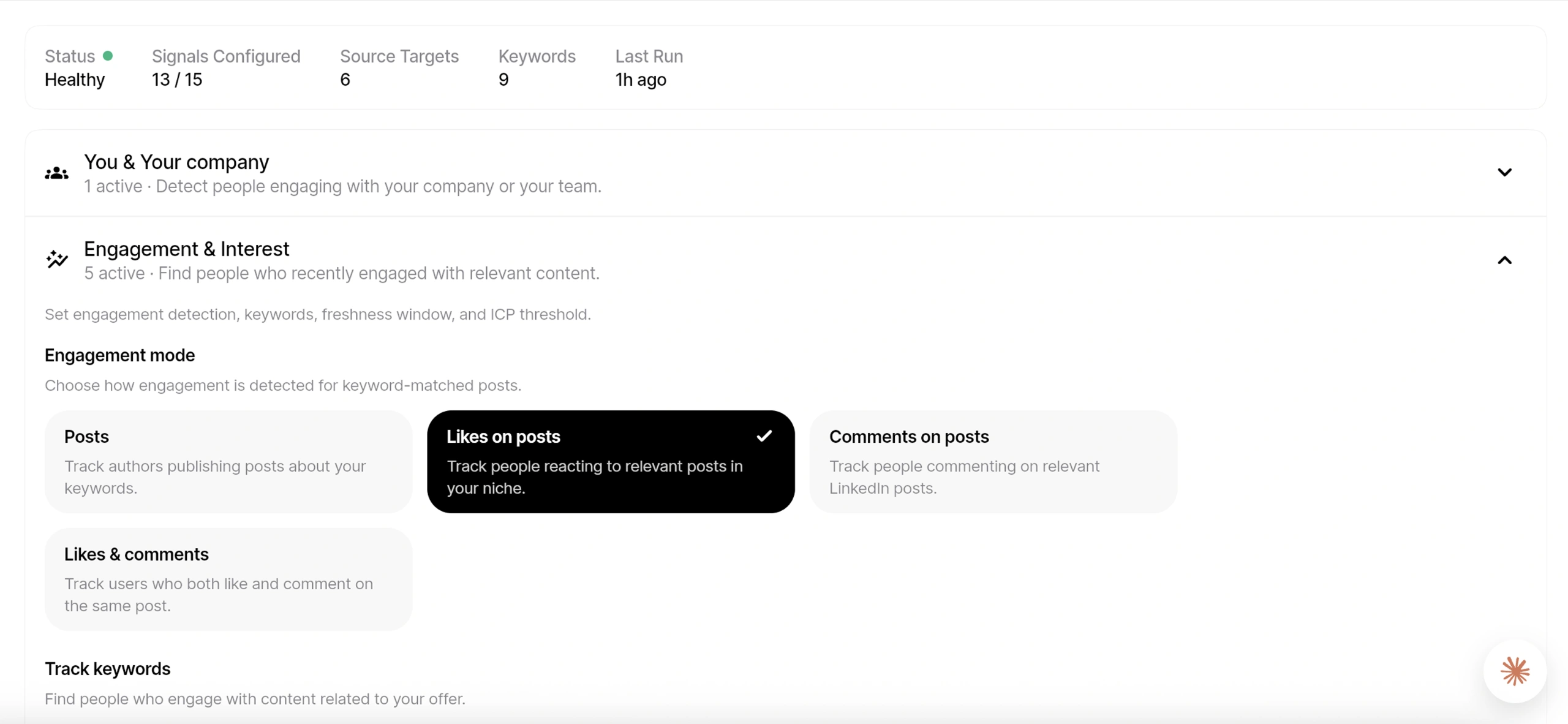
Not every signal is equal.
A useful signal is one that creates a plausible reason to believe:
Inside Intentbot today, that logic maps to signal discovery such as:
The point is not to collect noise.
The point is to surface leads where timing and context are stronger than average.
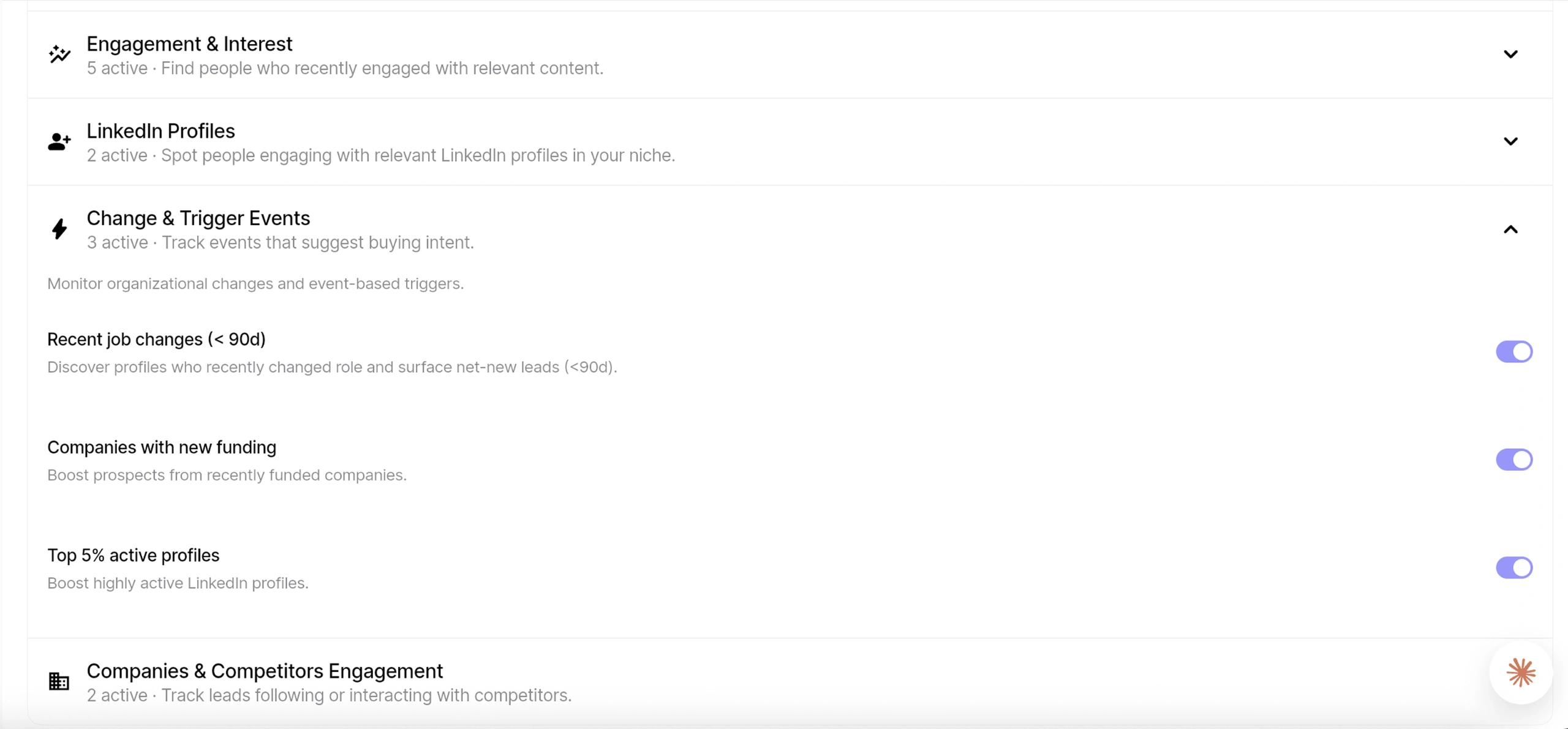
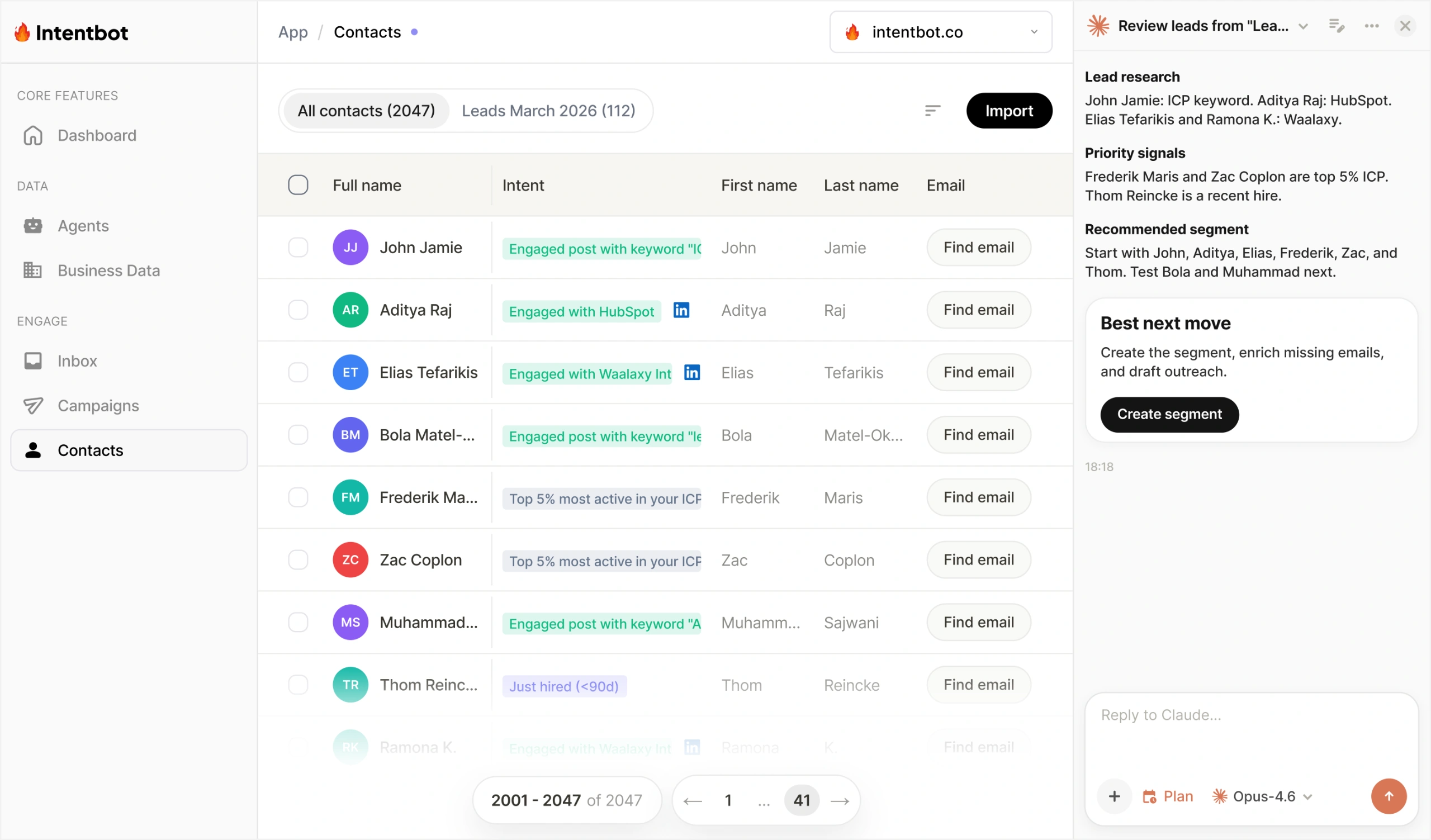
Proof element 1: example lead signal
Here is a simple example of what a useful lead signal can look like:
That is more actionable than a static list entry saying only:
Why?
Because now you have a reason to believe:
That is the difference between contact data and pipeline context.
Context is what turns a signal into judgment
A signal alone is not enough.
You still need to ask:
This is where many teams lose the advantage.
They find a signal, but they do not interpret it well.
So they still send a generic message.
The result is outreach that looks personalized on the surface but is strategically empty underneath.
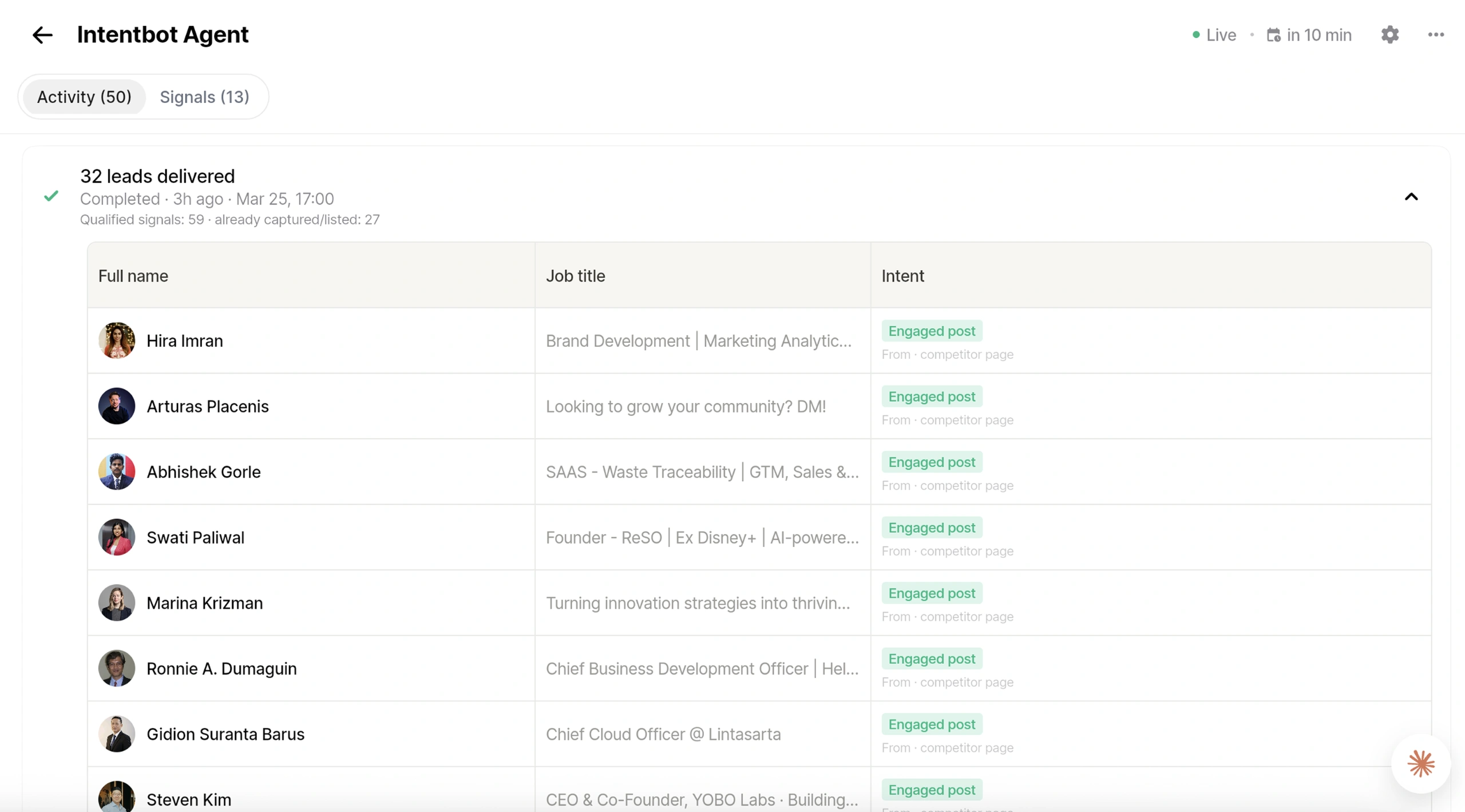
ICP filtering matters more than most teams think
If signal tells you why now, ICP tells you whether this person is worth the effort at all.
That is why signal-first outbound should not mean “message everyone who did something interesting.”
It should mean:
In Intentbot, that means using ICP criteria like:
This matters because a warm signal from the wrong account is still the wrong account.
Proof element 2: example outreach message
Once you have signal plus context, the message gets easier.
Not because AI magically writes perfect copy.
Because the thinking is better.
For example, instead of sending this:
You can send something closer to this:
Or, if the signal is a role change:
These are still simple messages.
But they are grounded in something real.
That is the point.
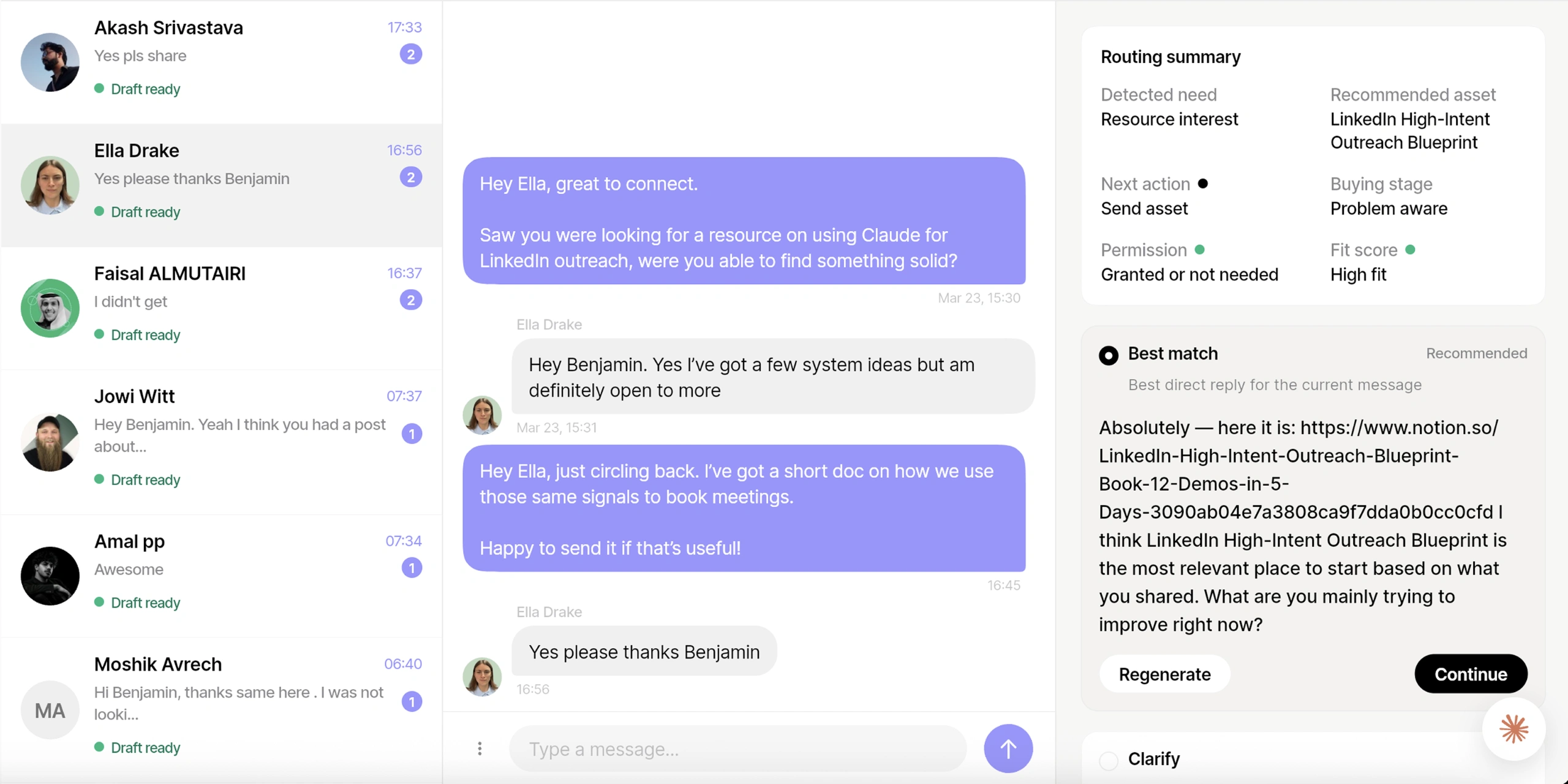
One concrete workflow
Here is a practical version of the workflow this blueprint recommends:
Step 1: Surface warm leads from signals
Use signal discovery to identify people showing relevant activity:
Step 2: Filter against ICP
Before outreach, qualify the lead:
Step 3: Interpret the signal
Ask what the signal actually means:
You do not need perfect certainty.
You need a plausible angle.
Step 4: Draft context-aware outreach or reply
Use the signal and ICP context to shape the message.
The goal is not to sound clever.
The goal is to sound appropriately informed.
Step 5: Operationalize what works
Once a pattern proves useful, move it into a repeatable workflow:
That is how signal-first outbound becomes a system instead of a one-off tactic.
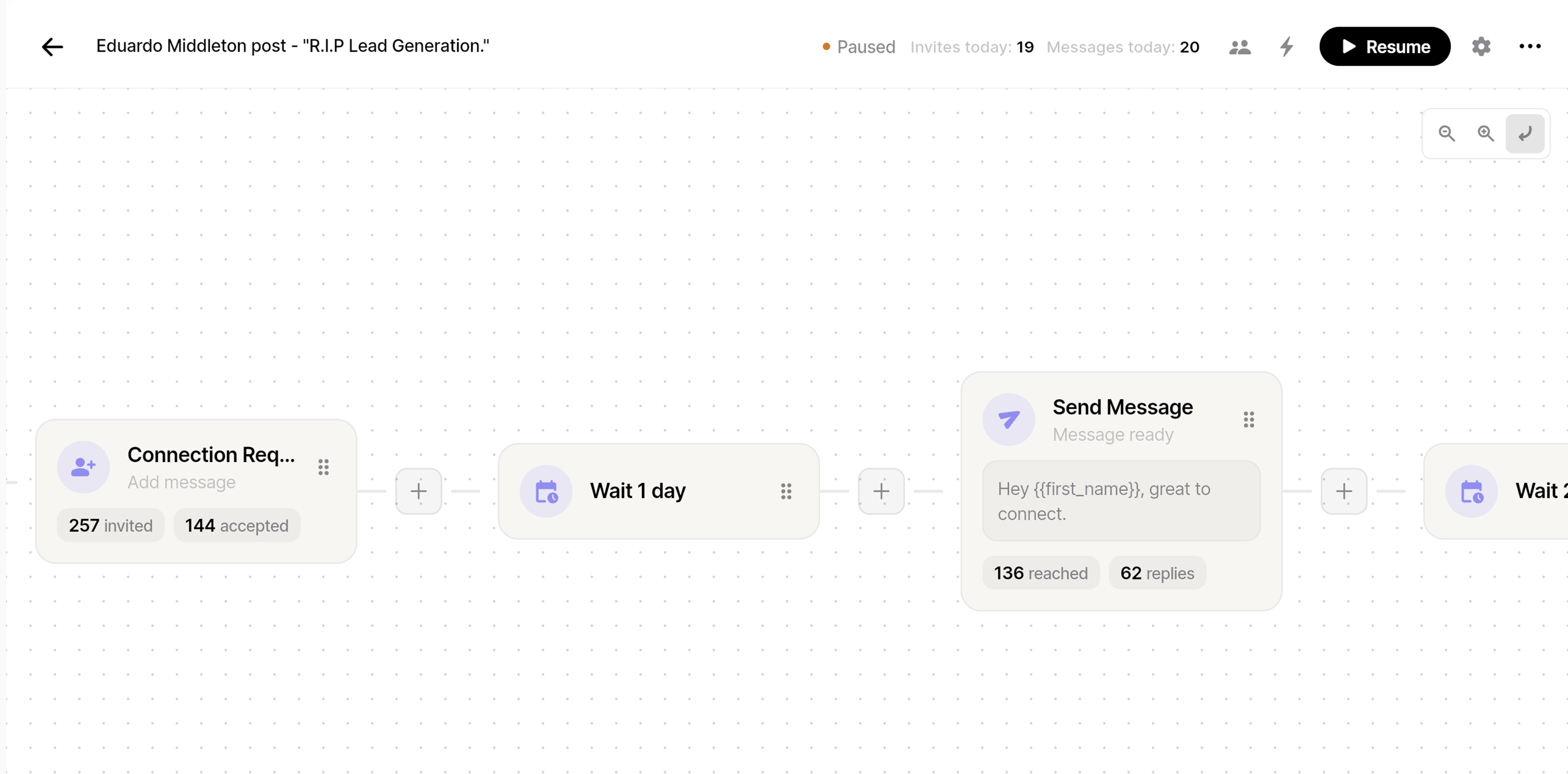
Mini-case: what better execution looks like
Imagine two teams targeting the same market.
Team A
Team B
Team B is not just “writing better messages.”
They are starting from better conditions.
That usually leads to:
That is the operational shift this blueprint is arguing for.
How Intentbot maps to this workflow
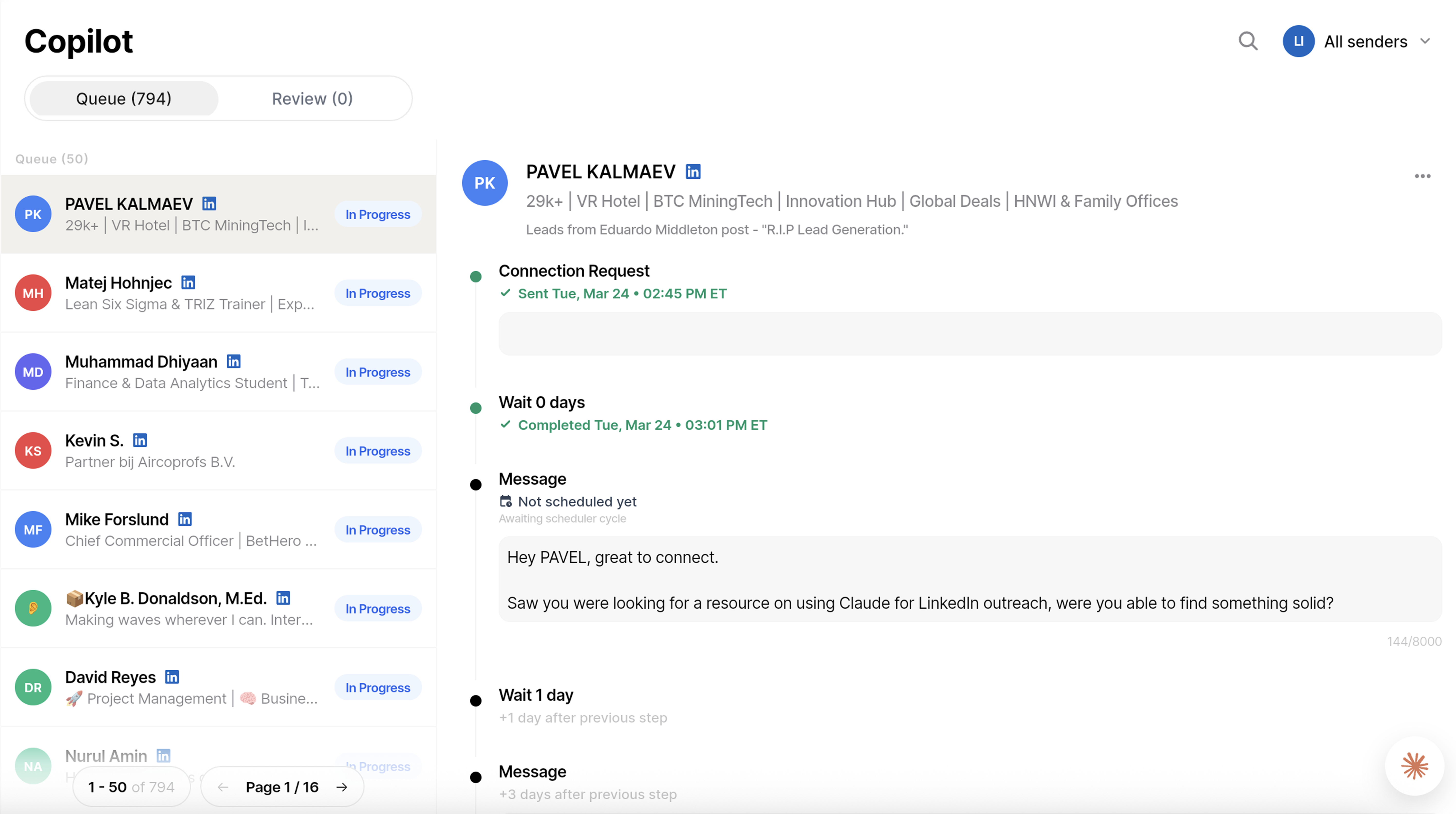
The easiest way to understand the product is through the operating sequence itself.
Signals → find warm leads
Intentbot’s signal agents help surface people based on real activity and trigger patterns, not just static database filters.
ICP → qualify before outreach
Intentbot helps narrow signal volume into leads that actually match your market, so your team spends time where it matters.
Inbox + reply drafts → respond with context
When conversations happen, Intentbot can help draft replies based on the context already present in the workflow, so follow-up stays relevant.
Campaigns + contacts + sender setup → scale what works
Once you know which signals and angles perform, you can organize contacts, structure campaigns, and operationalize the workflow more consistently.
Claude coworker inside the workspace → analyze and create faster
Claude inside Intentbot can work with your pages, campaigns, inbox context, and workspace data to help you think, write, refine, and build faster inside the actual operating environment.
That is why the product should be understood less as a single feature and more as an operating layer for signal-first LinkedIn pipeline creation.
Where most teams still go wrong
Even after adopting better tooling, teams often make one of four mistakes:
1. They confuse activity with intent
Not every engagement means buying readiness.
Signals should improve prioritization, not replace judgment.
2. They skip qualification
A relevant signal from a poor-fit account still creates wasted effort.
3. They over-automate the message
Automation helps most when it supports context, not when it mass-produces generic personalization.
4. They never operationalize the learning
If every good message is handcrafted from scratch, the system never compounds.
The goal is not just to find one good lead.
The goal is to build a repeatable way of finding and handling better opportunities.
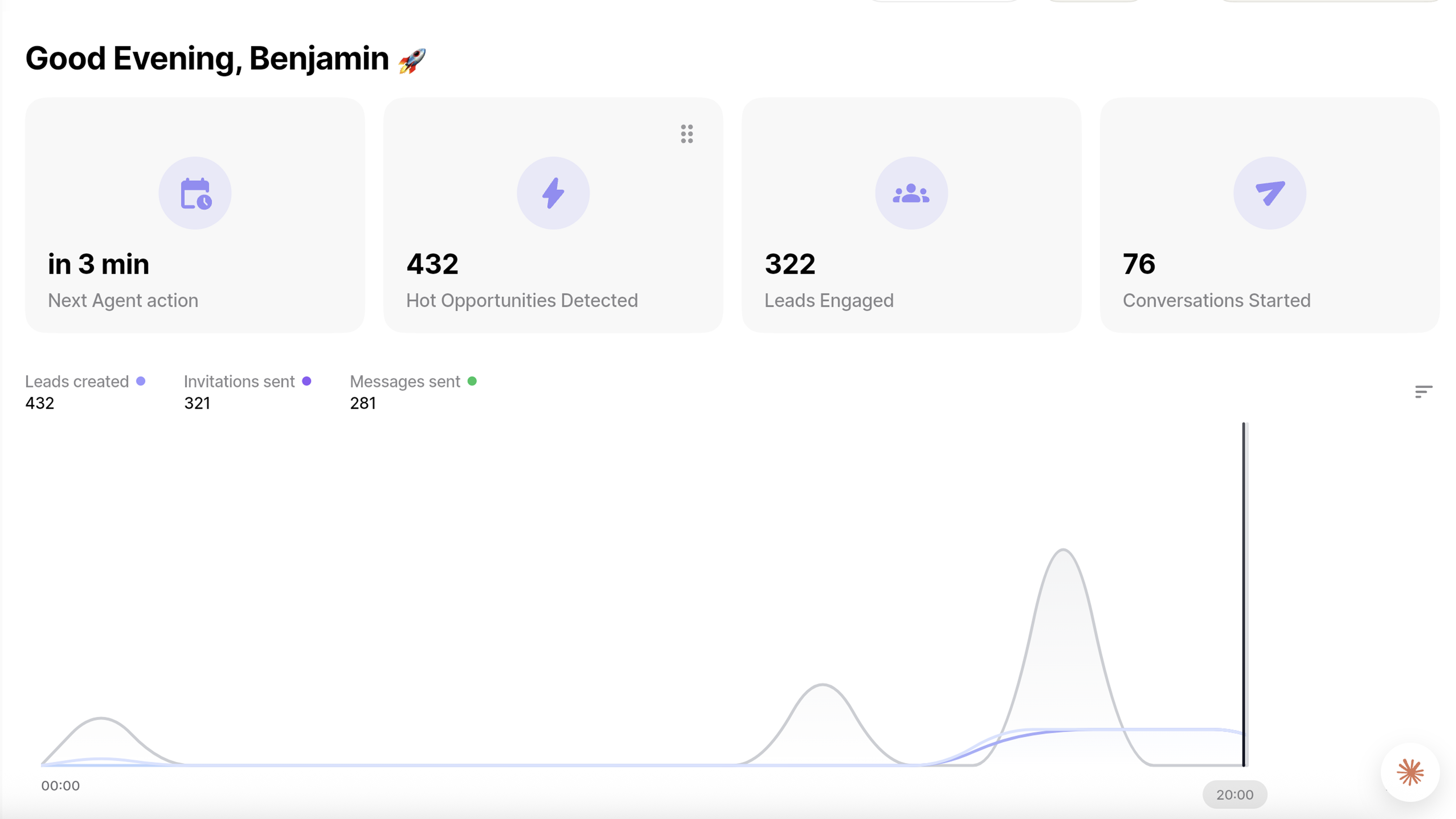
What to do next
If you want to apply this blueprint, start here:
That sequence is simple.
But it is much closer to how good pipeline is actually built.
Choose your next step
If you are curious and still exploring
Read the docs and study the workflow logic first.
You do not need to commit to a tool before you understand the operating model.
If you are an operator who wants to test this hands-on
Start a trial and use Intentbot to explore signals, qualify leads, and draft more context-aware outreach.
If you are a serious team evaluating this as a system
Book a demo and look at how signal discovery, qualification, reply drafting, campaigns, and Claude inside the workspace fit together operationally.
Final thought
The future of outbound is probably not “more automation.”
It is better timing, better context, and better execution built on top of real signals.
That is the shift from list-based prospecting to signal-first pipeline creation.
And that is the shift this blueprint is designed to help you make.
Want to explore Intentbot?